
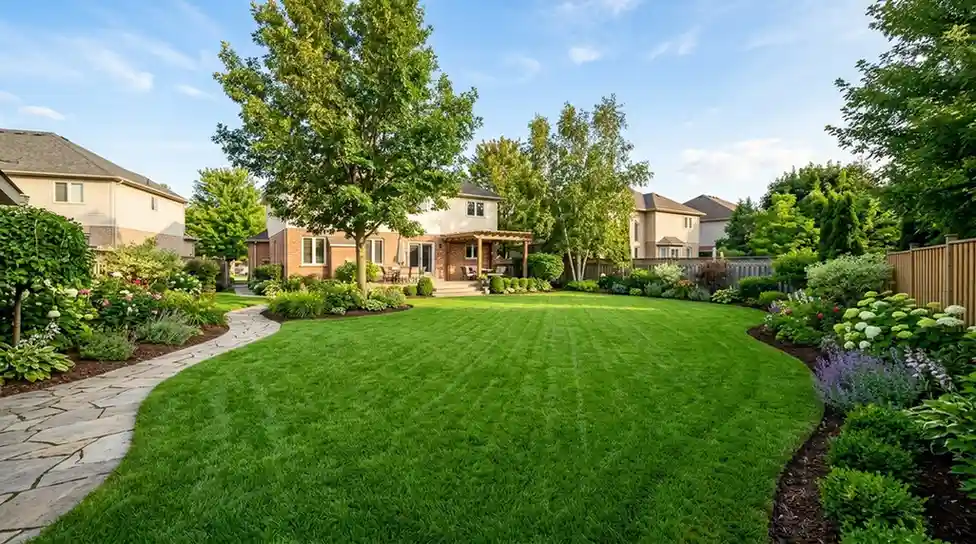
There is a specific kind of pride that comes with a perfectly manicured lawn. It’s the backdrop for summer barbecues, the soft carpet for your kids to play on, and the first thing neighbors notice about your home. But as any homeowner knows, that green paradise is under constant siege.
The enemy? Weeds. Whether it’s the stubborn yellow heads of dandelions or the sprawling chaos of crabgrass, weeds don’t just look messy—they steal nutrients, water, and sunlight from your grass.
The most common mistake people make is reaching for the strongest chemical they can find, only to end up with “leopard spots” of dead, brown grass across their yard.
At López Landscaping and Design LLC, we know that true weed control in lawn care isn’t about destruction; it’s about balance. Here is how you can achieve a pristine yard without compromising the health of your turf.
Know Your Enemy: The Anatomy of a Weed
To win the war, you have to understand who you’re fighting. In the world of residential weed control, we categorize invaders into three main groups.
Broadleaf Weeds
These are the easiest to spot. They have wide leaves and often produce flowers.
- Common Examples: Dandelions, clover, chickweed, and thistle.
- The Challenge: They often have deep taproots. If you pull a dandelion but leave half an inch of the root, it will be back in a week.
Grassy Weeds
These are the “spies” of the weed world. They look like grass, grow like grass, but they aren’t the grass you want.
- Common Examples: Crabgrass and foxtail.
- The Challenge: Because they are biologically similar to your lawn, using the wrong weed removal spray can accidentally kill your healthy grass too.
Invasive Weeds and Sedges
These are the tough guys, like Nutsedge, which thrives in wet soil and spreads through underground tubers (nutlets). Standard sprays rarely touch these; they require a specialized weed treatment lawn service.
Prevention: The “Pre-Emergent” Shield
If you wait until you see the weed, you’ve already lost the first battle. Thousands of weed seeds are likely sitting in your soil right now, just waiting for the temperature to hit 55°F so they can germinate.
This is where pre-emergent weed control comes into play. Think of it as a biological “force field” applied to your soil. It prevents the tiny weed seedlings from ever breaking the surface.
The Pro Secret: Timing is everything. If you apply pre-emergent too late, the seeds have already sprouted. If you apply it too early, the spring rains might wash it away.
A professional weed control lawn strategy involves monitoring soil temperatures to hit that “Goldilocks” window perfectly.
The Surgical Strike: Post-Emergent Herbicide
What if the weeds are already there? This is when you move to post-emergent treatment. The key here is selectivity.
At López Landscaping and Design LLC, we use professional-grade, selective herbicides. These products are formulated to identify the biological markers of a weed while ignoring the markers of your specific grass type (like Kentucky Bluegrass or Fescue).
The Dangers of DIY Sprays
Many “all-purpose” killers found at big-box stores contain non-selective chemicals like glyphosate. If you spray this on a patch of clover, it will kill the clover—but it will also kill every blade of grass it touches.
Our lawn weed removal service ensures that we target the weeds with surgical precision, leaving your lawn lush and green.
The Best Offense is a Great Defense
We often tell our clients, “The best weed control is a thick lawn.” Weeds are opportunists. They look for thin spots, bare patches, and stressed grass.
If your lawn is thick, healthy, and deep-rooted, the weeds simply don’t have the space or sunlight to grow. This is why lawn fertilization and weed control go hand-in-hand.
Core Components of a Healthy Lawn:
- Proper Mowing: Never cut more than one-third of the grass blade at a time. Taller grass shades the soil, which prevents weed seeds from getting the sunlight they need to sprout.
- Deep Watering: Water heavily but infrequently. This encourages healthy grass growth with deep roots that can out-compete shallow-rooted weeds during a dry spell.
- Lawn Treatment Plan: Consistent fertilization feeds the grass, not the weeds.
Why Professional Service Beats the “Bucket” Method
You might be tempted to spend your Saturday morning pulling weeds by hand. While it’s good exercise, it’s rarely effective for a large yard.
The Professional Advantage:
- Soil Analysis: We look at why the weeds are there. Is your soil too acidic? Is it compacted?
- Calibrated Application: Over-applying chemicals can “burn” your lawn. We use professional equipment to ensure an even, safe herbicide application.
- Crabgrass Control: Crabgrass is a beast that produces up to 150,000 seeds per plant. Once it’s established, it’s incredibly hard to kill without professional-grade post-emergent herbicide.
- Safety: We know the exact “dry times” required to keep your children and pets safe while ensuring the weed treatment lawn service is effective.
Seasonal Checklist for a Weed-Free Year
To keep your yard looking its best, you need a year-round approach. Here is how López Landscaping and Design LLC handles a typical lawn weed prevention service:
- Early Spring: Apply pre-emergent treatment and a light fertilizer to wake the lawn up.
- Late Spring: Spot-treat any broadleaf weeds (like dandelions) that managed to break through.
- Summer: Focus on crabgrass control and ensure the grass isn’t stressed by heat, which would allow weeds to take over.
- Fall: This is the best time for dandelion removal and aeration. Weedy plants are busy storing energy in their roots for winter, so they “drink” the herbicide more effectively in the fall.
Frequently Asked Questions
Is “weed-and-feed” from the store just as good?
Not usually. These products try to do two jobs at once and often do neither well. Fertilizers need to be watered in, while weed killers need to sit on the leaf to work. By separating these into a specialized lawn treatment plan, you get much better results.
Will the weed killer ruin my garden or flowers?
If not applied carefully, yes. Wind “drift” can carry chemicals to your rose bushes or vegetable garden. This is why hiring a professional weed control lawn team is vital—we use shields and specific nozzles to ensure the product stays exactly where it belongs: on the grass.
How soon can my kids play on the grass after a treatment?
Generally, once the liquid treatment has completely dried, the yard is safe to enter. Depending on the humidity and sun, this usually takes 1–2 hours. We always provide clear instructions after every visit.
Why do I still have weeds after one treatment?
Some weeds have multiple life cycles or “nutlets” underground that don’t die instantly. Weed control in lawn care is a marathon, not a sprint. It often takes a few consistent treatments to totally clear out a neglected yard.
Partner with the Pros
You shouldn’t have to spend your entire weekend fighting a losing battle against clover and crabgrass. Your lawn should be a place of relaxation, not a source of stress.
At López Landscaping and Design LLC, we take the guesswork out of yard care. Our expert team understands the science of herbicide application and the art of healthy grass growth.
We don’t just kill weeds; we build beautiful, sustainable outdoor spaces. Ready to reclaim your yard? Stop searching for “how to pull weeds” and start looking forward to a perfect lawn.
Contact us now for your free estimate on our residential weed control and lawn care packages!