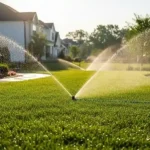

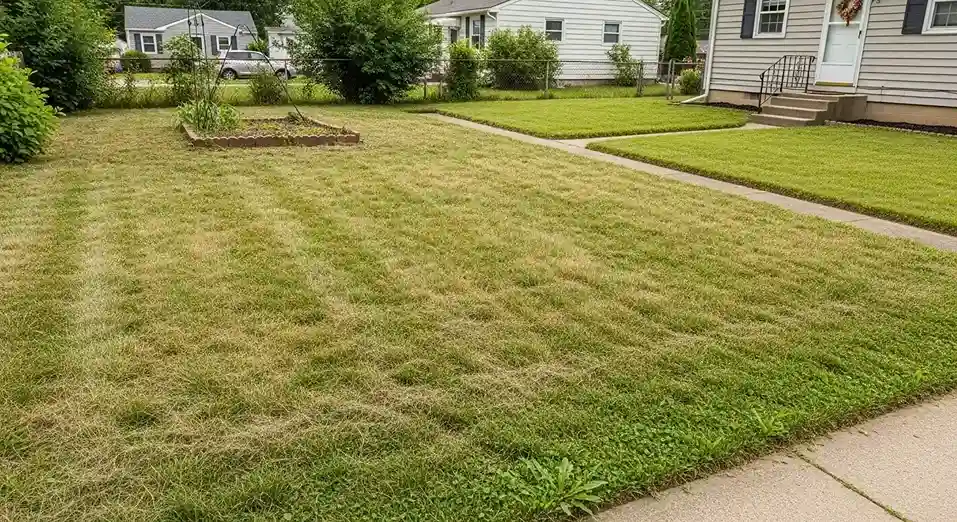
Signs lawn needs care are often easy to miss at first, but they quickly become obvious when your yard starts losing its healthy green look. A lawn rarely declines overnight; it slowly shows warning signals like uneven growth, dry patches, and weed spread. Understanding these early signs helps you take action before small issues turn into costly repairs, especially for homeowners focused on maintaining a clean and attractive yard like Backyard Design Winchester, VA.
We’ve all been there. You spend your Saturday morning hauling the mower out of the garage, squinting at the yard, and wondering, “Was that brown spot there last week?”
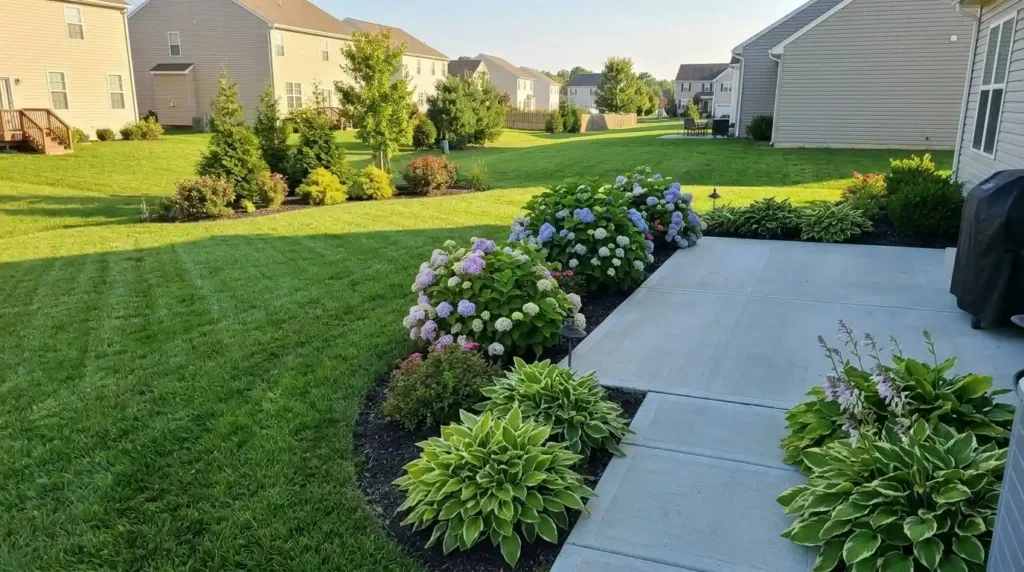
Owning a home comes with a lot of pride, and the lawn is usually the centerpiece of that pride. It’s where your kids play, where you host summer BBQs, and the first thing you see when you pull into the driveway after a long day.
But sometimes, despite the bags of store-bought fertilizer and the religious watering schedule, the grass just doesn’t cooperate.
If you’re noticing these signs your lawn needs maintenance, it might be time to put down the spreader and call in the experts at López Landscaping and Design LLC.
Let’s dive into the red flags that indicate your soil and grass are under duress and why a professional touch makes all the difference.
Signs Lawn Needs Care: The Color Palette of a Stressed Lawn
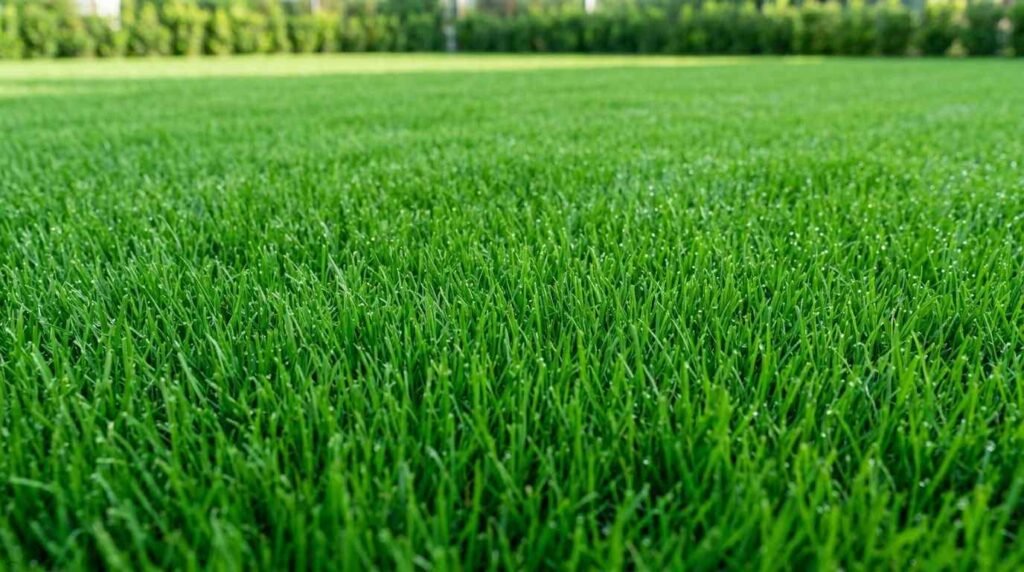
Visual cues are usually the first lawn care warning signs. A healthy lawn should be a consistent, vibrant green. When that color starts to shift into a “Technicolor” disaster, your lawn is trying to tell you something specific.
Yellow Grass Patches: Signs lawn needs care
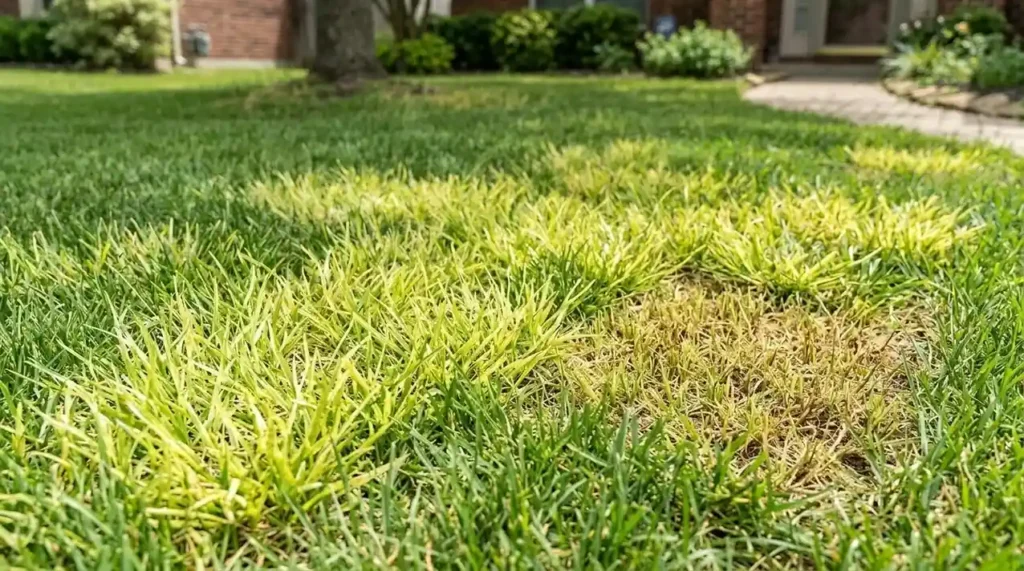
If you see yellow grass patches (chlorosis), your lawn is likely starving. This is a classic symptom of nutrient deficiency.
Most often, the soil is lacking iron or nitrogen, which are the building blocks of that deep green color.
However, yellowing can also be caused by improper mowing practices—specifically, cutting the grass too short (“scalping”), which shocks the plant and prevents it from photosynthesizing correctly.
Brown Patches and “Straw” Texture
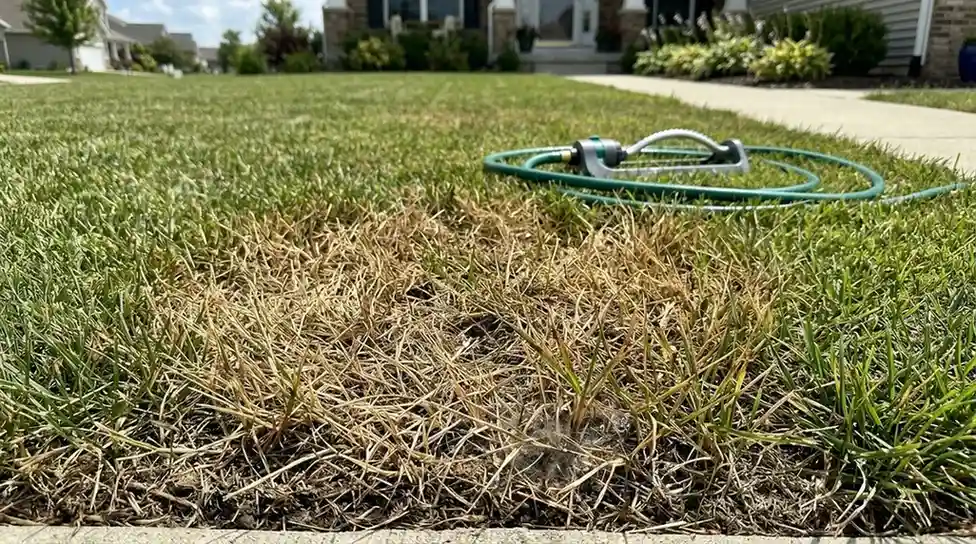
Brown patches are the most common lawn damage symptoms we see. Usually, homeowners assume it’s just a lack of water, so they crank up the sprinklers.
But if the water doesn’t fix it, you might be looking at a brewing fungal lawn disease. Fungus loves moisture and heat; if you water at night, you might actually be making the problem worse.
The Dull Grey Tint: Signs lawn needs care
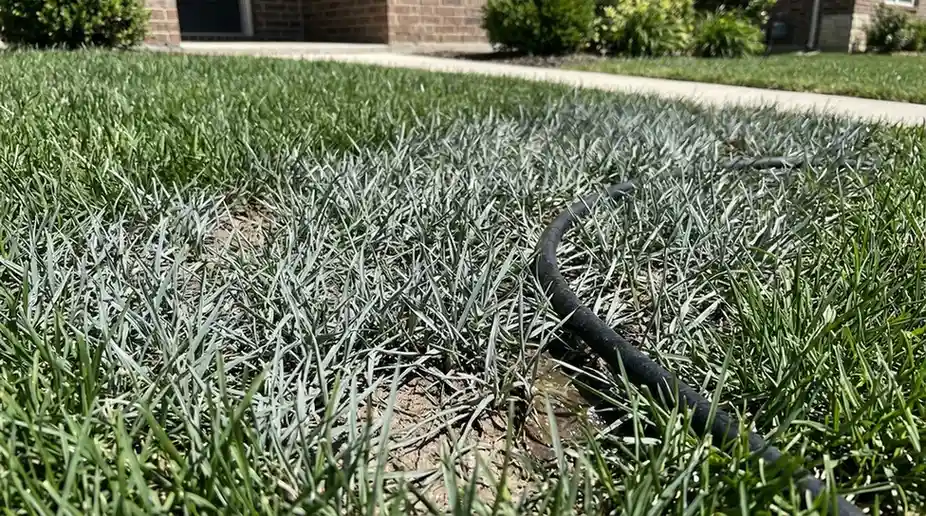
If you notice your signs lawn needs care has lost its “pop” and looks somewhat silver or dull grey, it’s in the early stages of lawn stress signs.
This usually happens right before the grass wilts. It’s a cry for a better watering schedule that penetrates deep into the root zone rather than just hitting the surface.
When the ground itself feels “off,” and signs lawn needs care appear
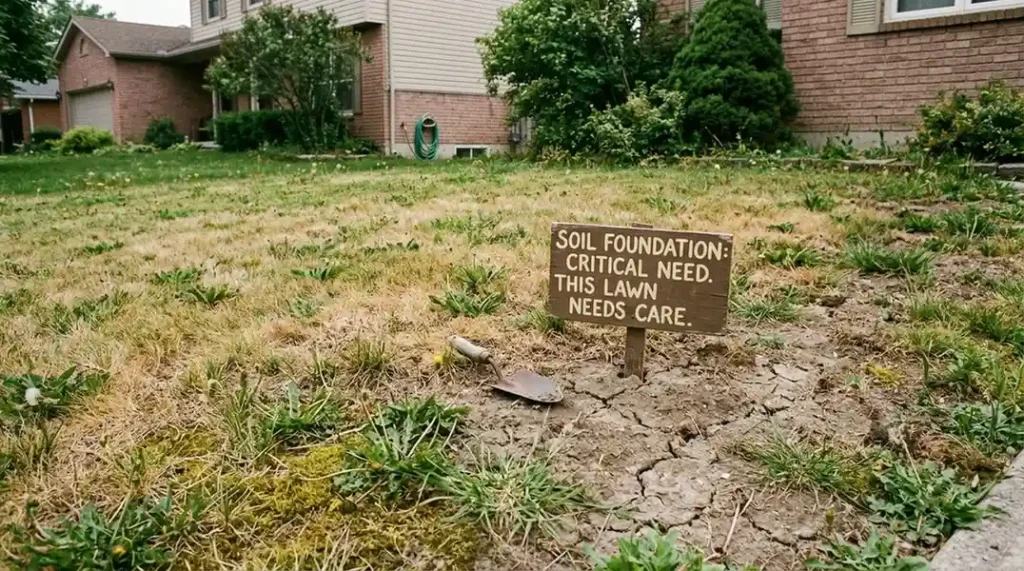
Sometimes the problem isn’t the blade of grass, but the “house” it lives in. The soil is the foundation of everything, and when the foundation is shaky, the grass will show it.
Soil Compaction: The Silent Killer
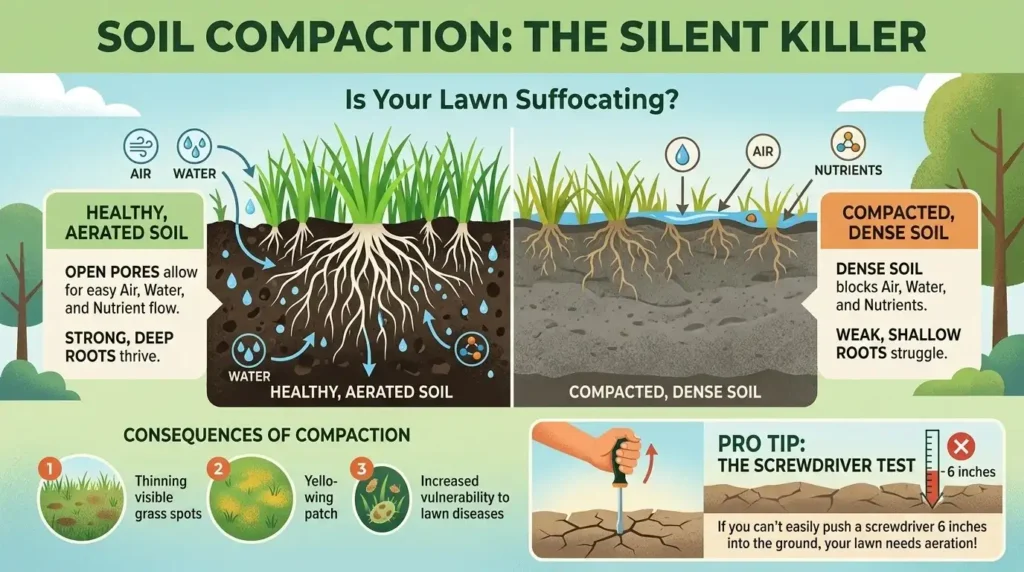
If your lawn feels as hard as a brick, you have soil compaction. This happens over time from foot traffic, heavy mowers, or simply the settling of the earth.
When soil is compacted, there are no air pockets left. Roots can’t breathe, water can’t reach the bottom, and nutrients sit on top of the dirt instead of soaking in. This leads to lawn thinning and eventually bare spots in the signs lawn that need care.
Pro Tip: If you can’t easily push a screwdriver 6 inches into the ground, your signs lawn needs care is suffocating. This is when professional aeration becomes a necessity, not a luxury.
The Spongy Turf Syndrome
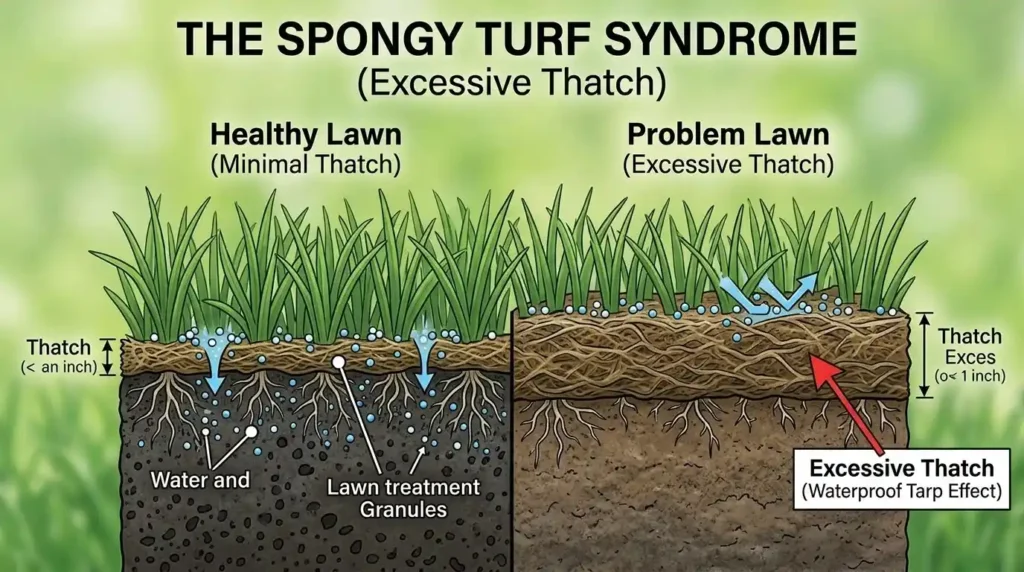
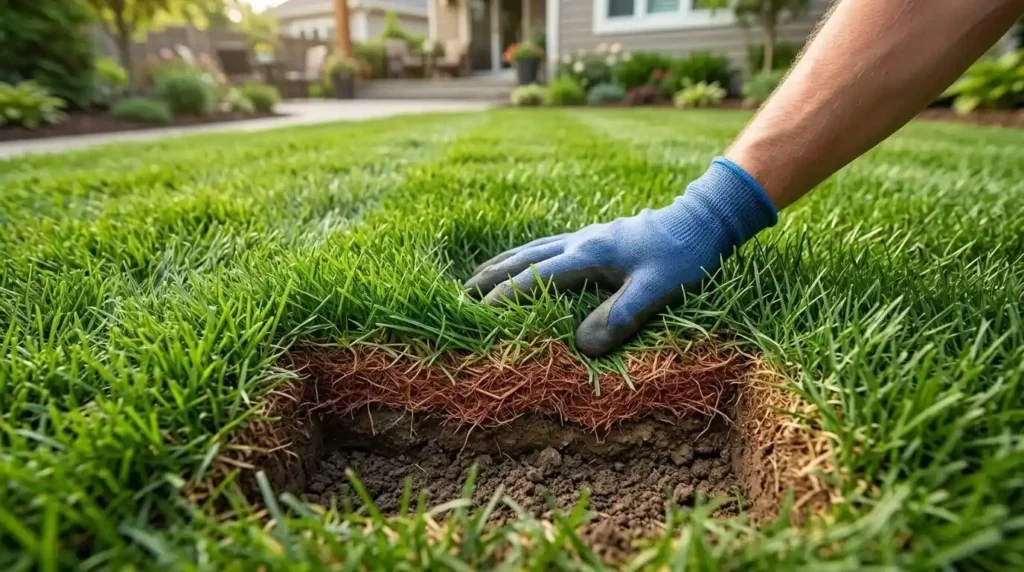
On the flip side, if the ground feels unnaturally bouncy or “squishy” (and it hasn’t rained recently), you likely have a “thatch” problem. Thatch is a layer of organic debris that sits between the grass and the soil.
A little is good; too much acts like a waterproof tarp, preventing your lawn treatment from actually reaching the roots.
Signs lawn needs care: Weeds, Pests, and Unwanted Guests Takeover
Nature abhors a vacuum. If your grass isn’t healthy enough to occupy its own space, something else will move in.
Weed Overgrowth: Signs lawn needs care
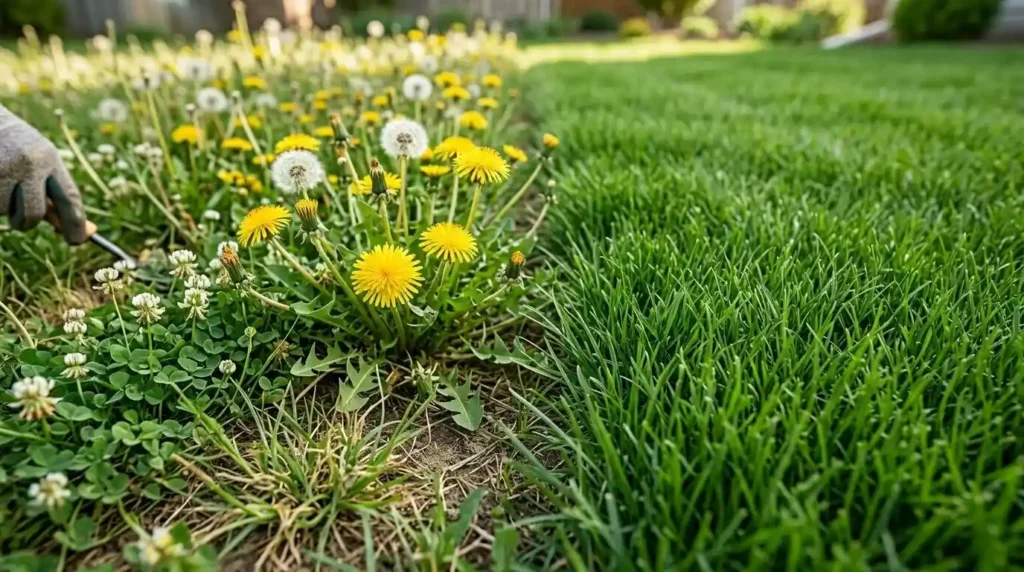
An explosion of dandelions, clover, or crabgrass is a primary indicator of poor lawn condition. Weeds are opportunistic.
They thrive in “low-competition” environments. If your lawn is thinning, weeds will see that as an invitation to move in and set up shop.
Professional-grade fertilization and weed control don’t just kill the weeds; they thicken the grass so the weeds have nowhere to grow.
Pest Damage
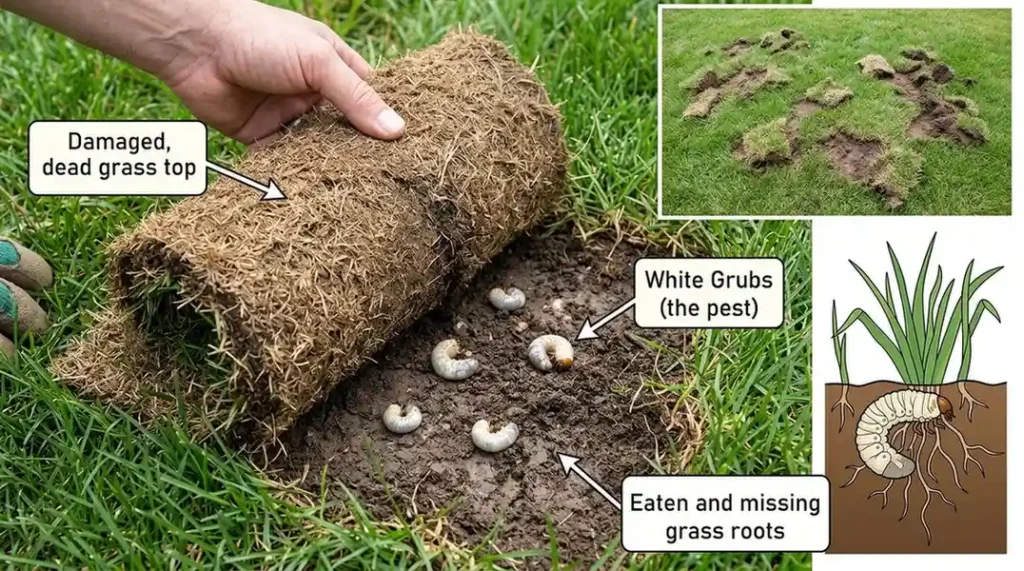
If you see patches of grass that look like they’ve been dug up by a small animal, or if you can literally lift a patch of turf like a piece of old carpet, you have a pest infestation.
Grubs are the usual suspects here. They eat the roots right off the plant, leaving the top to die. By the time you see the damage, the pest-damaged lawn needs immediate intervention to stop the spread.
Drainage and Environmental Red Flags
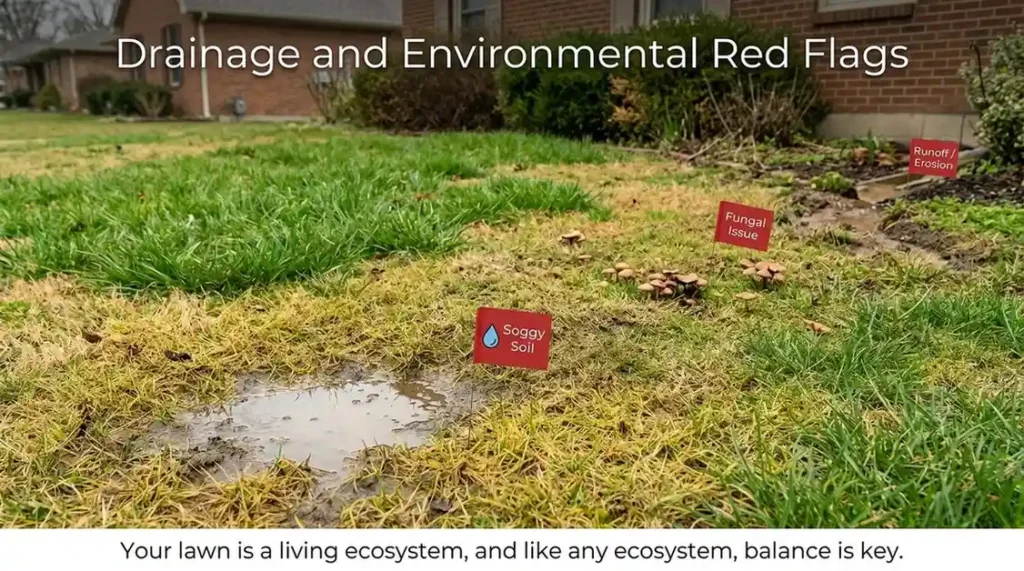
Your lawn is a living ecosystem, and like any ecosystem, balance is key.
Poor Drainage
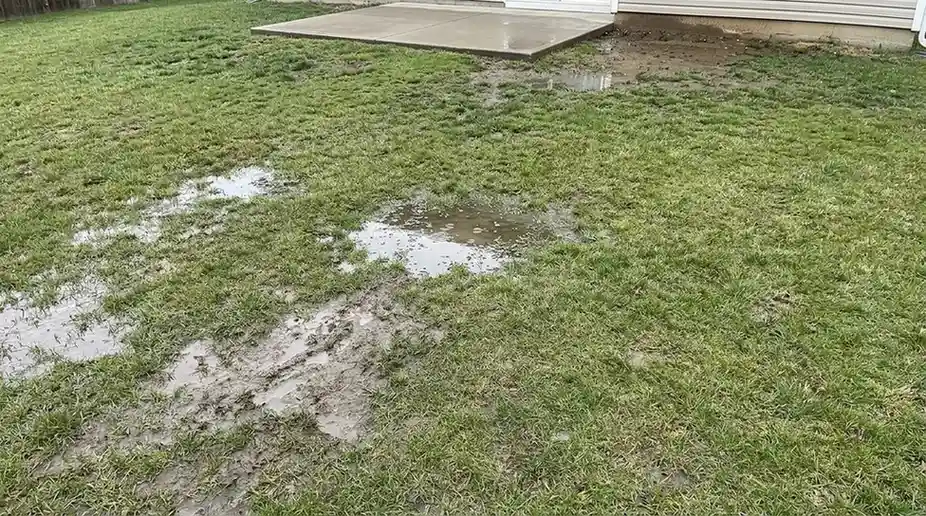
Do you have lingering puddles or “swampy” spots 24 hours after a light rain? Poor drainage lawn issues are more than just a nuisance for your shoes.
Standing water drowns grass roots and creates a breeding ground for fungus and mosquitoes. Often, this requires soil improvement or mechanical grading to ensure water moves away from your home and off your turf.
Uneven Growth
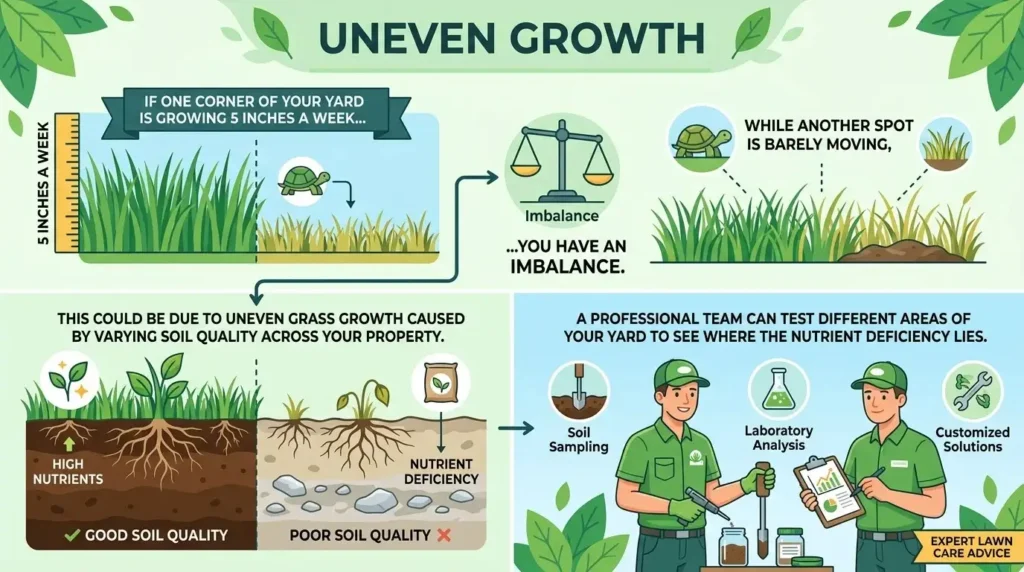
If one corner of your yard is growing 5 inches a week while another spot is barely moving, you have an imbalance.
This could be due to uneven grass growth caused by varying soil quality across your property. A professional team can test different areas of your yard to see where the nutrient deficiency lies.
Why “DIY” Isn’t Always the Answer
We love the DIY spirit, but lawn care is a science. When you buy a bag of fertilizer at a big-box store, it’s a “one size fits all” solution.
But your lawn isn’t “all.” It has its own unique pH balance, its own shade patterns, and its own history.
At López Landscaping and Design LLC, we don’t just mow and go. We look at the big picture:
- Seasonal Care: What your lawn needs in the spring is vastly different from what it needs to survive a frost.
- Tailored Lawn Treatment: We use professional-grade products that are safer and more effective than off-the-shelf options.
- Lawn Care Routine: We help you establish a rhythm for mowing and watering that works with nature, not against it.
The Emotional Value of a Great Yard
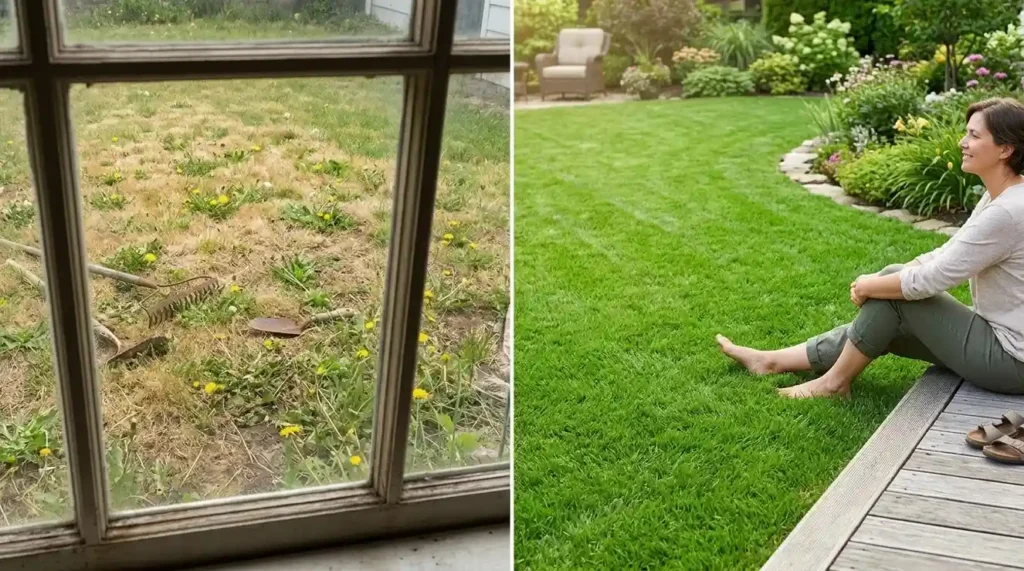
Let’s be honest: a brown, weed-filled yard is stressful. It’s that nagging chore at the back of your mind every time you look out the window.
On the other hand, a healthy, professionally maintained lawn is a sanctuary. It’s a place where you can kick off your shoes and feel the cool, soft grass between your toes. It increases your home’s value and makes you the envy of the neighborhood.
When to Call López Landscaping and Design LLC
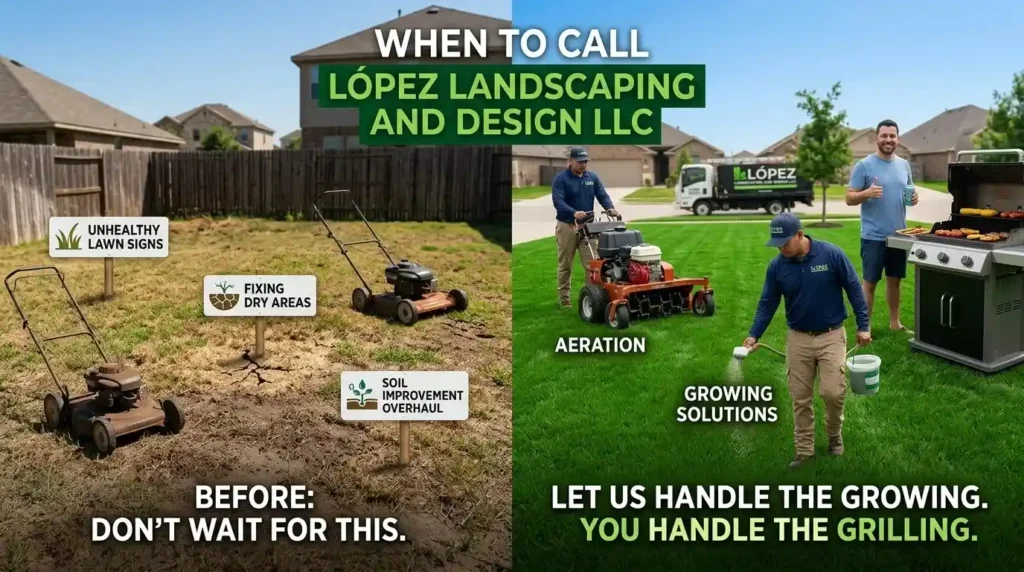
Knowing when your lawn needs treatment can save you thousands in sod replacement costs. If you’re seeing unhealthy lawn signs, don’t wait for the grass to turn completely into dirt.
Whether it’s aeration, fixing dry lawn areas, or a complete soil improvement overhaul, we have the tools and the expertise to bring your yard back to life. You handle the grilling; let us handle the growing.
Is your lawn trying to tell you something?
Maintaining a lush, emerald-green carpet isn’t just about manual labor; it’s about understanding the complex biology happening beneath your feet.
If your yard is starting to look more like a desert landscape than a suburban oasis, it’s not a failure on your part—it’s just a sign that your dirt is tired.
Don’t ignore guide the signs of poor lawn condition. Let the team at López Landscaping and Design LLC give your outdoor space the professional touch it deserves.