
Lawn Turning Brown Causes Explained
A healthy green lawn can quickly lose its color, and it usually starts with small warning signs that are easy to ignore. When you notice lawn turning brown causes showing up in patches or spreading across your yard, it often points to issues like watering problems, soil stress, pests, or even hidden lawn diseases. The important thing is that this change doesn’t happen overnight without a reason.
What this really means is your grass is reacting to something in its environment. Maybe it’s not getting enough moisture, or maybe it’s getting too much. In some cases, the problem sits below the surface in compacted soil or nutrient imbalance. Once you understand the root lawn turning brown causes, it becomes much easier to bring your grass back to life and stop further damage before it spreads.
There is a specific kind of pride that comes with a perfectly manicured, emerald-green lawn. It’s the backdrop for summer barbecues, the soft carpet for bare feet, and the first thing neighbors notice when they drive by.
So, when those unsightly brown lawn patches start creeping across your yard, it feels personal. You’ve put in the work, you’ve set the timers, and yet, your grass is looking more like a shredded wheat cereal box than a lush oasis. At López Landscaping and Design LLC, we hear the frustration in our clients’ voices every summer.
“Why is my lawn turning brown despite everything I’m doing?” The truth is, your grass is a living, breathing organism, and it’s likely trying to tell you something. Let’s dive into the common culprits behind a browning lawn and how you can nurse your turf back to health.
The Great Mystery: Lawn Turning Brown Causes, Dead Grass vs. Dormant Grass
Before you start mourning your lawn or planning an expensive replacement, you need to determine if your grass is actually dead or just taking a nap.
Dormancy is a natural survival mechanism, especially for cool-season grasses. When the thermometer spikes, the grass shuts down to protect its crown and roots, turning a tan or golden brown. It’s not dead; it’s just hibernating to survive drought stress.
How to tell the difference:
- The Tug Test: Grab a handful of the brown grass and give it a firm tug. If it resists and stays anchored, it’s likely dormant. If it pulls out effortlessly with no roots attached, you’re looking at dead grass.
- The Water Test: Focus on a small brown patch and water it consistently for a few days. If it starts to green up, you’re dealing with dormancy or dehydration. If it stays brown, the damage may be permanent.
The Watering Tightrope: Lawn Turning Brown Causes, Underwatering vs. Overwatering
It seems simple: grass needs water. But finding the “Goldilocks” zone—not too much, not too little—is where many homeowners struggle.
The Signs of Underwatering
Drought stress is the most common cause of a lawn turning brown in summer. When the soil dries out, the grass blades will often take on a wilted, bluish-gray tint before turning completely brown. You might also notice that your footprints stay visible in the grass long after you’ve walked across it because the blades lack the moisture to “spring” back.
The Dangers of Overwatering
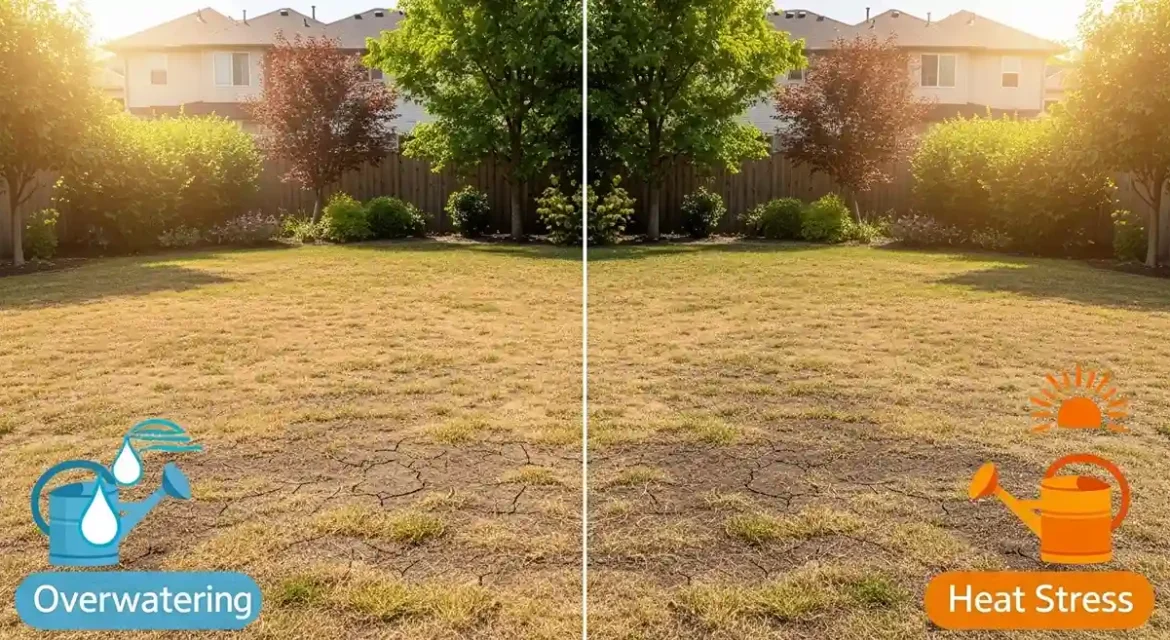
Ironically, too much love can be just as deadly as a lawn turning brown causes. Overwatering lawn areas creates a “drowning” effect. When soil is constantly saturated, oxygen can’t reach the roots. This leads to poor drainage, lawn issues, and root rot. If your lawn feels spongy or “squishy” underfoot even days after a rain, or if you see mushrooms and yellowing blades, you’re likely overwatering.
The Easy Fix: Aim for about one inch of water per week, delivered in one or two deep soakings rather than daily light sprinkles, which cause the lawn to turn brown. This encourages the roots to grow deeper into the soil to reach moisture, making them more resilient to heat.
Summer Heat Stress and Soil Compaction: Lawn Turning Brown Causes
In the peak of July and August, the sun is relentless. Heat stress lawn damage often appears in the areas of your yard that get the most direct sunlight or are adjacent to “heat sinks” like concrete driveways and sidewalks. These surfaces radiate heat long after the sun goes down, literally baking the soil beneath the grass.
Compounding this is soil compaction. If your lawn sees a lot of foot traffic—kids playing, dogs running, or even the path you take to the trash cans—the soil becomes packed tight. This prevents water and nutrients from reaching the root zone, leading to dry grass issues that no amount of surface watering can fix.
The Easy Fix: Core aeration is the secret weapon here. By removing small plugs of soil, we allow the earth to breathe and ensure that water actually reaches the roots instead of just running off the surface.
Hidden Enemies: Lawn Fungus and Disease
If your lawn has brown spots that are perfectly circular, have a “frogeye” appearance (green in the middle with a brown ring), or seem to be spreading rapidly despite proper watering, you might be dealing with a lawn fungus or grass infection.
Fungus thrives in warm, humid conditions—especially if you water your lawn in the evening. Leaving grass wet overnight is like putting out a welcome mat for disease.
Common Symptoms Include the Following:
- Brown Patch: Large, irregular circular patches that look thinned out.
- Dollar Spot: Small, silver-dollar-sized spots that can merge into large areas of dead grass.
- Red Thread: A pinkish or reddish tint to the grass blades before they turn brown.
The Easy Fix: Switch your watering schedule to the early morning (between 4:00 AM and 8:00 AM). This allows the sun to dry the blades quickly while the roots soak up the moisture. If the fungus persists, a professional fungicide treatment from López Landscaping and Design LLC can stop the spread.
Invisible Invaders: Lawn Pests
Sometimes the problem isn’t what’s happening on the grass but what’s happening under it. Lawn pest damage can be devastating because it often goes unnoticed until the grass is already dying.
- Grubs: These are the larvae of beetles, and they love to feast on grass roots. If you have patches of brown grass that you can peel up like a piece of carpet, you likely have a grub infestation.
- Chinch Bugs: These tiny insects suck the moisture out of grass blades and inject a toxin that turns the grass yellow and then brown. They love hot, dry weather and often start their damage near the edges of the lawn.
Fertilizer Burn and Mowing Habits
Sometimes, we are our lawn’s own worst enemy.
- Fertilizer Burn: We all want a green lawn, but more is not always better. High-nitrogen fertilizers are essentially salts. If applied too heavily or without enough water, they can “suck” the moisture out of the grass, leading to fertilizer burn, grass often appearing as bright yellow or brown streaks that follow the path of your spreader.
- Mowing Too Short: This is known as “scalping.” If you cut your grass too short, you’re removing its ability to photosynthesize and shade its own roots. This makes the lawn much more susceptible to heat stress.
The Easy Fix: Never remove more than one-third of the grass blade height at a time. Keep your mower blades sharp; dull blades “tear” the grass rather than cutting it, leaving it vulnerable to disease.
Quick Comparison: Diagnosing Your Brown Patches
| Symptom | Likely Cause | Recommended Action |
| Pulls up easily like a rug | Lawn Pests (Grubs) | Professional pest treatment |
| Circular patches with “smoke” rings | Lawn Fungus | Adjust watering; Fungicide |
| Brown edges near the driveway/sidewalk | Heat Stress | Increase deep watering in those zones |
| Streaks of brown across the yard | Fertilizer Burn | Flush with water; adjust spreader settings |
| Footprints remain visible for minutes | Underwatering | Increase frequency of deep soakings |
When to Call in the Pros
We understand that your home is your sanctuary, and the state of your landscape plays a huge role in how you feel when you pull into the driveway.
While some easy fixes like adjusting your sprinkler timer or raising your mower blade can make a world of difference, other issues—like soil compaction, chronic irrigation issues, weeds, or aggressive lawn disease—require a professional touch to fix the lawn turning brown causes.
At López Landscaping and Design LLC, we look at the big picture, from your drainage patterns to your specific grass type, to create a customized plan that moves your lawn from yellow to brown grass back to a vibrant, healthy green. Don’t spend another summer staring at a brown yard guide.
Reach out to López Landscaping and Design LLC today.
Let’s get your lawn back to being the envy of the neighborhood!